


Awesome blossoms on the… blooming prairie
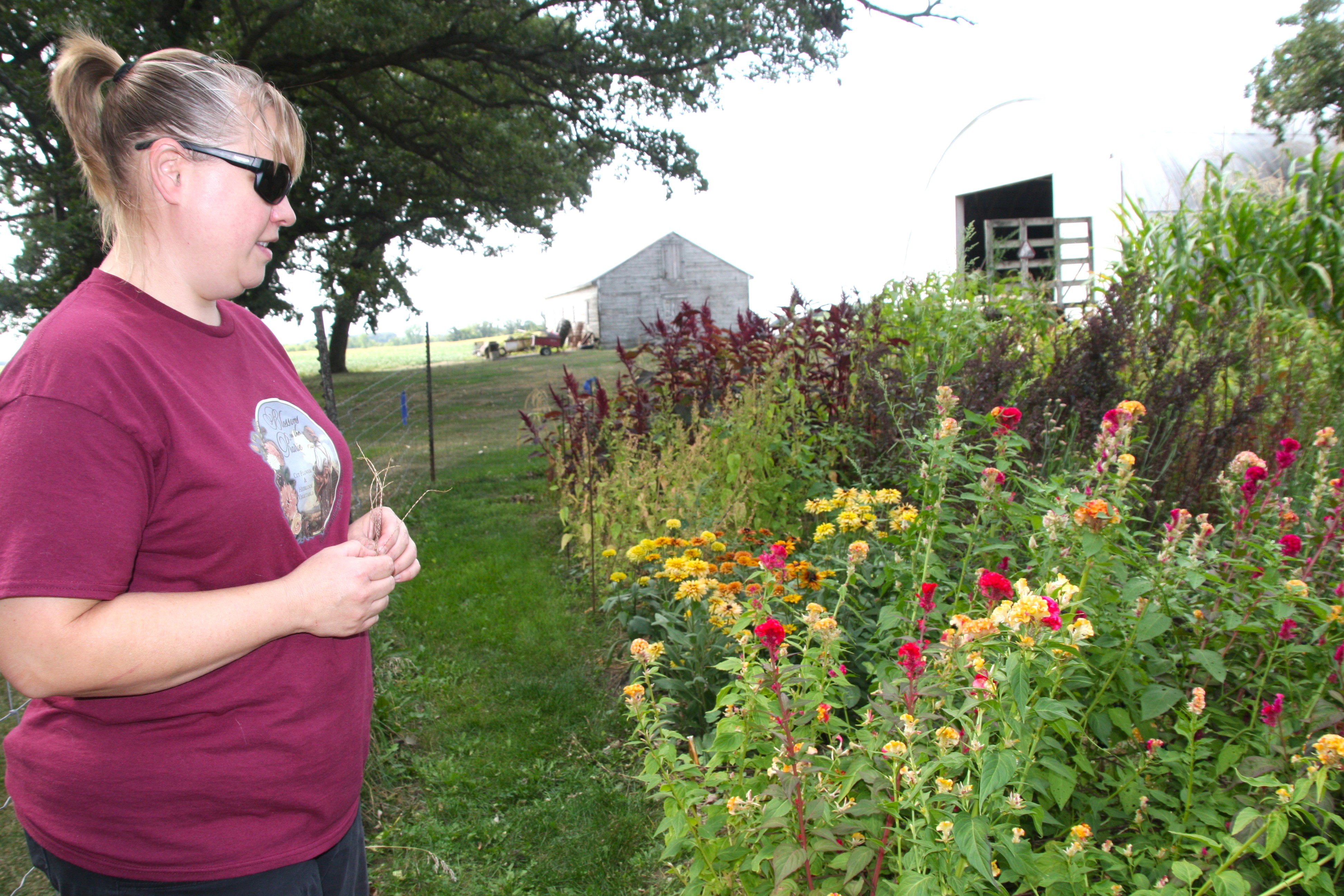
Nicole Kruger, owner of Blossoms on the Prairie, stands inside one of her gardens of Victorian-era-inspired flowers. She offers a bouquet subscription service and DIY buckets for the flowers, and sells heirloom vegetables. Staff photo by Kay Fate
It’s hard to say which is more impressive: Nicole Kruger’s sense of entrepreneurship, her sense of responsibility to nature, or her sense of tradition.
A self-described “farmHer,” the longtime gardener prides herself on her organically grown, locally grown “crops.”
They include heirloom vegetables and Victorian-era-inspired cut flowers that Kruger sells from Blossoms on the Prairie, a family farm just south of Blooming Prairie.
From apples to zinnias, her products are grown without pesticides or herbicides. They are also, in a world where the word “unique” is overused, exactly that.
A trip to her flower garden will reveal tiny silk bags covering the blooms of her dahlias to protect them from bugs.
“I bag pretty much all of them when they’re buds,” Kruger said. “That’s how I maintain a premium product.”
She grows 70 different varieties of flowers and has sold to wholesalers and travels to farmers markets, but is focusing on direct-to-consumer through subscriptions and DIY buckets of flowers.
As this season winds down, Kruger’s plans for next summer include expanding her custom bouquet work for individual sales.
Tradition
Kruger’s gardens are on the farm site where her grandparents lived; it’s where she first started gardening.
“I started out helping my grandma through the years,” she said. “As she got older and wanted to do less, I asked for a section of the garden” to grow her own vegetables.
Kruger, a 1994 graduate of Blooming Prairie High School, got serious about gardening in her late 20s. She relocated the garden to make the most of the sun and shade and expanded it.
Her focus on heirloom vegetables is purposeful: “Generally speaking, they’re an older variety of produce that people brought to the U.S.” from their own countries, she said.
The vegetables are open pollinated, so she can reuse the seeds next season. That goes for her squash, pumpkins, tomatoes, and more.
“I don’t grow the standard reds,” Kruger said of the tomato varieties. Instead, she has found success with tasty – yet odd – varieties such as Black Beauty. Yes, they’re black.
She’s repaired musical instruments out of her home for the last 26 years and helps her father, Keith, with corn and beans.
Farmer, florist, fixer, Kruger agreed.
Entrepreneurship
“I had been looking at alternative crops to grow,” she said, before landing on flowers: specifically, upscale, sophisticated blooms.
After what Kruger described as “years of research and tons of study,” she started selling her flowers in 2021.
Despite the research, she’s been surprised by the amount of maintenance required to meet her expectation of quality.
“Vegetables – I plant them, mulch them, forget about them, harvest them,” she laughed. “Flowers, though, they have to be planted how they want to be planted.”
That means at a certain distance from other plants, with netting to keep the stems and stalks upright, and to be harvested – cut – at exactly the right spot on the stem.
The right time to harvest, too, is critical.
“You want to pick stuff before the bees get it,” Kruger said. “Once something is pollinated, it tells the flower to die. For cut flower use, you have to get them at exactly the right time: when they’re mature, but before they’re too mature.”
That could be the difference of just a few hours, she said.
The time of day matters, as well.
“Early morning or late in the evening is when they’re most hydrated, so they’ll last,” Kruger said.
Another challenge is, in a word, Minnesota.
“The season is short,” she said. “I’d like to get a greenhouse or (hoop house) to at least get more (growing) time.”
This year, she started everything from seeds inside over the winter. Many of Kruger’s blooms are annuals, meaning she must plant them each year.
“The problem is, if you screw up on something one year, you have to wait a whole year to try it again,” she said. “You don’t know if it’s a seed problem or a climate problem or a rain problem.”
Kruger does have some perennials, including irises, roses, and tulips. The colors range from elegant to exotic.
Her bouquet subscriptions fall into two categories: Blossoms and Awesome Blossoms.
Remembering her roots, she said with a laugh.
Responsibility to nature
“I reuse everything,” Kruger said, from her grandmother’s old curtain rods to posts from her grandfather’s old fence to several sets of bedsprings.
“I haven’t had to buy any of the ‘traditional’ things for flowers, because I repurpose things,” she said.
Periodic beeps can be heard coming from the garden – ultrasonic spikes to keep the voles away.
A simple wire fence has strips of blue cloth every few feet, because it’s one of the few colors deer can see, Kruger said.
“I hate fences,” she said. They make it harder to maneuver around while gardening, “and they interrupt the flow of the deer and turkeys. I wish I could be more considerate, but they’ll walk in it. The turkeys will pull things up to taste it, then leave it.”
Several wild turkeys roost in the grove of trees near the gardens.
“They get in here, and I have to help them out,” Kruger said.
The feathers they leave behind are also harvested, sanitized, and offered for sale. She may also use them in custom fall bouquets.
“I just make what looks good to my eye,” Kruger said. “I’m not the norm; I’m not cookie-cutter. I do things differently.”
Blossoms on the Prairie
To learn more about Kruger’s heirloom vegetables or for a flower subscription, visit blossomsontheprairie.com