


Free speech or failed response?
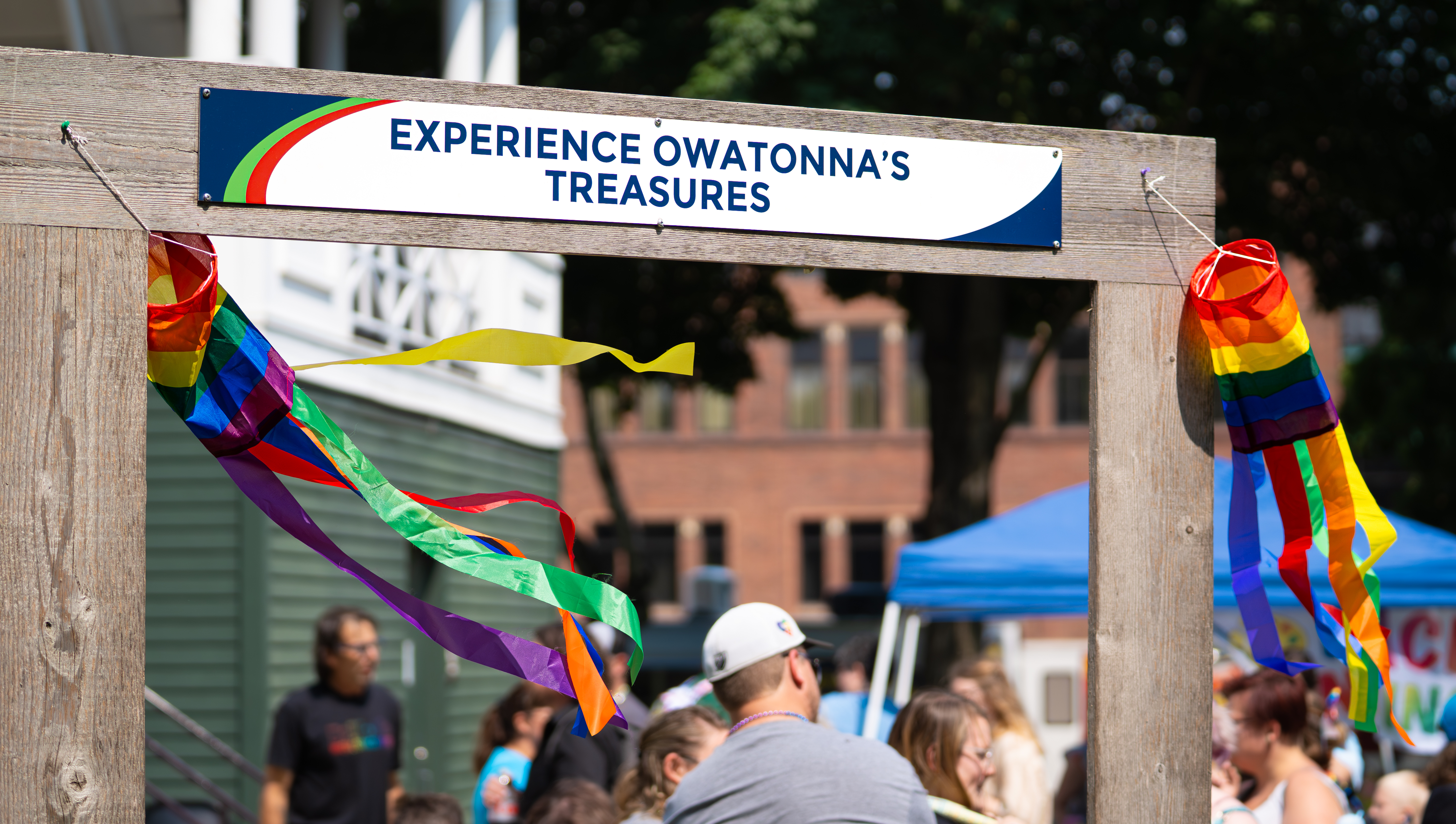
Some people are claiming Owatonna Police failed at Pride in the Park held earlier this month in Central Park. Staff photo by Johnnie Phillips
“What happened on Saturday, I believe, was a failure of response specifically by our police department.”
Rainbowatonna board president Nathan Black spoke plainly with Owatonna city officials last week about this year's Pride in the Park, held July 12 in downtown's Central Park. While it began peacefully, a group of religious protestors led by Old Paths Baptist Church pastor Jason Cooley of Northfield created disruptions that left attendees feeling threatened and fearful.
Speaking during public comment, multiple residents described how protestors followed them shouting taunts and name-calling and recorded it all with a video camera.
They blocked the Central Park bandshell stage with signs and amplified sound to the point where emcee and performer Alan O'Malley-Laursen said he couldn’t hear himself sing “because they were right there in front of me blasting away.”
Sue Leithold-Bowcock was working at the craft space “when things started to get out of hand.” Protestors started encroaching on the area and displayed a picture on an aborted baby facing the children’s table.
“I had children crying,” she said. “I had one child say that he was told he was the devil and he was going to go to hell. This is not acceptable. This is not who we are.”
Black said there were “specific instances of incitement to violence.” Organizers made “multiple calls” throughout the day to have police present, with no response until a city staff member in attendance made a call, he said.
Black also acknowledged a “major concern about how to enforce city statutes while honoring civil rights and protecting First Amendment rights.” He asked that the city invest in consultation with a civil rights attorneys to educate police officers about how to respond in similar situations.
Attendee Levi Hendricks said shouting at others while following them around in a public park is not free speech, it’s “harassment and intimidation,” and preventing others from exercising free speech is suppression. He called the police response “an embarrassment. I ask the city and the police department to do better and do it now.”
Suggested solutions
Black and others who spoke also urged the city to establish permits that allow for exclusive use of parks, which other cities have adopted. Rochester’s ordinance, for example, allows its Parks and Recreation Dept. to issue exclusive permits for any picnic shelter or park area for a specific date and time. The ordinance states “no person shall in any manner disturb or interfere with any club or party occupying the ground under such permit without their consent.”
Kendra Wilson, whose daughter is part of the LGBTQ+ community, broke down in tears as she spoke about children being forced to see “hateful and graphic content” at what was otherwise a joyful event. She urged officials to consider establishing designated protest areas to “ensure free speech doesn’t come at the expense of public safety and community well-being… that everyone's rights are respected.”
Police response
While city council members typically do not offer a response to concerns raised during public comment, more information–along with a statement from Owatonna Police Chief Jeff Mundale–was released on Tuesday.
In an email, Communications Manager Deanna Sheely said police and city leaders met with event organizers several times before Pride in the Park, and police representatives worked with the event security team before and the day of the event. The department dedicated an incident commander, as well as a response team to visually monitor the event from outside the park. Other officers patrolled the Central Park area.
“There were no calls received from the event’s security team requesting law enforcement presence during the event,” Sheely wrote. “OPD received one call from this team inquiring about whether the protesters could lawfully stand on the sidewalk in the park.”
Officers responded in person four times during the event and informed protestors about the city’s ordinance prohibiting sound-amplification in and within 150 feet of a park without a permit. While the group moved away from the event grounds, they still didn’t have a permit, so officers shut down that activity.
Protestors moved back to the grounds and in front of the stage with large signs.
"The visible presence of officers when they returned to the event to address this worked effectively to motivate the protesters to move away from the stage area,” Sheely wrote.
In a separate statement, Mundale said police “recognize the natural tension that can exist between First Amendment freedom of speech protections, the right to assemble in public spaces and groups using public spaces for events… A high level of diligence is essential in ensuring officers’ responses are appropriate and lawful.”
While Pride in the Park attendees found protestors’ signs and words disturbing, he said, “courts have held that such words and graphic images are protected speech even though they may be clearly offensive and disturbing to see, even for children.”
“The court's remedy, in these instances, is to ignore it,” he wrote. “Citizens and police officers need to beware and exercise caution to avoid an unconstitutional response or trigger assaultive behavior. Pride event attendees showed a courageous level of reserve by not responding aggressively to the protesters and their offensive behavior.”
“It is upsetting to hear how some Pride in the Park attendees were impacted by the behaviors of those who protested at the event,” Mundale wrote. “We are pleased this year’s Pride in the Park event was held with no reports of injury or arrests. We will continue to work with community members and Rainbowatonna as we remain committed to making ongoing improvements in how we manage events with protestors,” he wrote.