


A look at the ledger
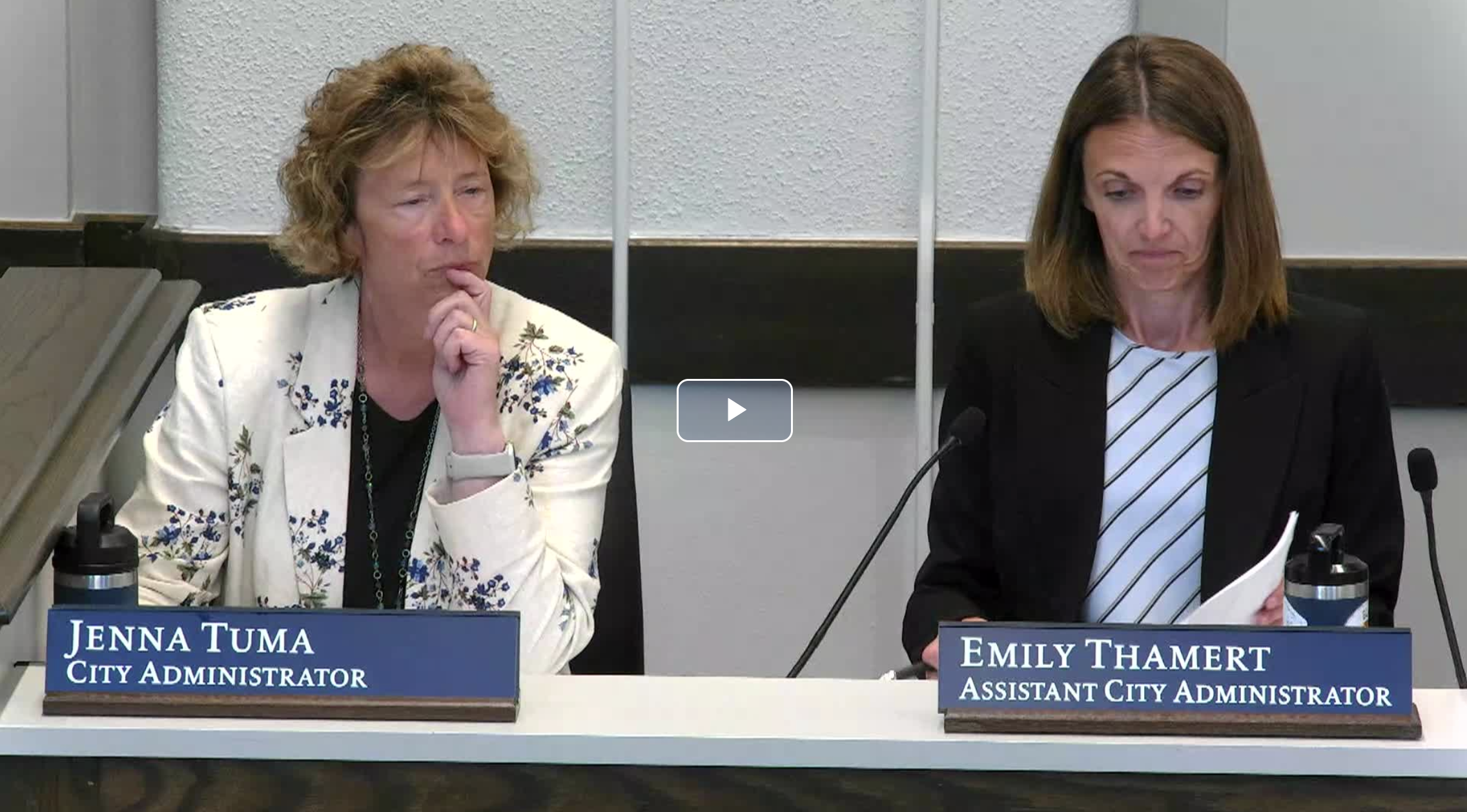
-Jenna Tuma, City Administrator
O-Town Crisis Investigation At Glance
This is the third in a series of stories planned by the Steele County Times about employee turnover and changes at the City of Owatonna. The Times was approached by several people, including current and former employees, about leadership concerns, which sparked this investigation. We are providing anonymity to the employees who wanted to share their stories but say they fear retaliation – even former employees. The Times knows the identities and has verified their employment and roles with the city.
On Dec. 31, 2024, the finance department for the city of Owatonna had four full-time employees and one part-time employee.
By May 15, 2026, they were all gone.
While some were recent hires – the finance director, for example, was hired in October 2024 – some of them had been at their job for several years.
The previous finance director had been there for nearly 15 years.
The one thing they had in common was who they said was behind their departure: Jenna Tuma, the city administrator.
Though only one was terminated, two said they were presented with a “resign or we’ll fire you” document. The other three – including the former finance director – said they “could see the writing on the wall,” and left voluntarily.
The mass exodus has led many current and former employees to believe Tuma was “targeting” the finance department.
Department make-up
Tuma served as Owatonna’s first-ever assistant city administrator from August 2024 until she was hired as the successor to longtime City Administrator Kris Busse in May 2025. Tuma assumed the lead role on Aug. 8, 2025.
In December 2024, the finance department consisted of a finance director, a financial analyst, a payroll person, accounts payable; and a part-time accounts receivable person.
Following the departure of those five employees over the course of 18 months, the department has been restructured.
Citing a staffing shortage, in December 2025 the city hired Jodi Bursheim, of Abdo Financial Solutions, to serve as interim finance director until a permanent position could be recruited.
Bursheim is paid $17,500 monthly or $210,000 annually.
The position of finance director was formally posted on June 3; applications closed July 3. According to the city’s search schedule, the goal is to have a permanent employee in place in October.
The city also contracted with Abdo Financial Solutions to assist the department with audit preparation services for the current fiscal year.
The audit prep carried a price tag of $105,000 – an expense that was not budgeted.
Both measures passed 6-1 at the Dec. 18 Owatonna City Council meeting; Brent Svenby was the lone opposing vote.
In addition to Bursheim, who works remotely, the department now consists of an accounting analyst, a senior accounting specialist and two accounting clerks.
The departures were a concern, several employees said.
Nobody in the finance department understood the budgeting process because of all the staff turnover, one woman said.
“We didn’t know where to find things.”
Tuma told the Times the city had “invested $71,000 in an independent, outside review of our own financial processes, specifically because protecting taxpayer money matters more to me than avoiding a hard look at our own systems.
“That review has led to a wide range of improvements across our financial operations, resulting in cost-effective and efficient handling and accounting of city money, and it's exactly the kind of spending decision I stand behind without hesitation.”
‘Big Bucks Tuma’
Multiple city employees told the Times that Tuma had a well-known nickname around city hall, dating to her days as Parks & Rec director: Big Bucks Tuma.
“We’d be sitting in a meeting and Busse was like, ‘oh, here comes Big Bucks Tuma’ in front of all of us,” one woman said.
When Tuma became city administrator, staff reportedly tried to rein in what they claimed was excessive spending.
In addition to allegedly telling Tuma she needed to “cut the spending on crazy things,” an employee claimed a member of the finance department told council members, “’this isn’t fiscally responsible. We shouldn’t be doing this,’ or ‘this doesn’t make sense.’ That’s the kind of finance/bookkeeper you want,” the woman said.
In response to the allegations, Tuma said she “certainly won’t spend time worrying about what a few people might call me. A culture of name calling is exactly what we’re moving away from at Owatonna. I'm comfortable defending any specific expenditure on its merits.”
No tracking
During its investigation, the Times often searched for information both on the city’s website and through months’ worth of city council agendas and packets.
For about a year – from April 2025 to April 2026 – no monthly financial statements were provided to members of the city council or the public.
The breakdown in financial reporting came at a critical time:
- A transition in the city’s financial advisor;
- An expanded proposal for public safety facilities;
- A transition in the city’s audit firm;
- A new communications firm hired
All of those come with a cost, of course.
Abdo LLP was paid more than $420,000 between September 2025 and April 2026.
CliftonLarsonAllen LLP, a subsidiary of CLA, has provided the city’s audits for the past several years. It was paid $35,500 between November 2025 and January 2026.
This year’s audit was completed by BerganKDV. One of its findings was a lack of separation of duties, attributed to the “limited number of office employees.”
Segregation of duties reduces the risk of mistakes and fraud; said auditor Andy Grice. The city received an unmodified, or “clean” audit opinion.
Baker Tilly, another subsidiary of CLA, was the former financial advisor. It was paid nearly $23,000 between November 2025 and February 2026.
Its successor, Ehlers & Associates, overlapped Baker Tilly for about three months. From November 2025 through March 2026, Ehlers received payments totaling more than $217,000.
From January 2025 through May 2026, the city has spent at least $2.2 million on outside vendors.
Spending decisions
As the financial advisor for the city, Ehlers assists with financial planning, debt management, capital improvement plan structuring and bond sales for public infrastructure projects.
“That’s a whole other thing,” a former employee said. “A lot of brokers will do for free what Ehlers does (for Owatonna) for a steep fee. That wasn’t properly researched – and it was one of those things none of us should have been deciding about without fully checking into it.”
It’s the use of consultants as a whole that seems to concern employees, most of whom believe much of the work could be done by city staff.
“She is really big on not letting us do our jobs and hiring outside consultants to do it,” one woman said. “I feel she is wasting money – it affects my pocketbook, too.”
Another employee said Busse used to allow city employees to write grants – specifically, the wastewater funding for Owatonna and Medford.
Under Tuma, she said, the city is paying a lobbyist to write grants. “We were doing that with our own employees before.”
The city has about $43 million in investments, and reportedly made $2.5 million from them, a third employee said. “We were doing a very good job with an excellent bond rating,” but it changed with the finance department turnover.
The woman claimed the city lost money by shifting investments to the same company that holds the city’s bonds, which isn’t legal. The investments had to be moved to another company.
The Times was not able to verify the claim.
At least two city council members have also taken exception to the use of consultants.
“It seems like … we can’t turn around and blow our nose without consulting ICS,” Dan Boeke said at the June 16 council meeting, referencing the city’s most-used consulting firm. “At some point in time, we’ve got to be able to do something without consultants, whether it’s ICS or somebody else.”
The public erupted into spontaneous applause.
Defending decisions
At that meeting, Tuma said that without professional services contractors, the work would have “no plan, there’s no scope of work, then there’s nothing to hold them to, because we don’t have a document that says ‘this is the work that you’re supposed to do.’
“I know paying consultants is a lot of money, but not having it done right costs us more, too,” she added.
When asked about it for this series, Tuma said “cities of any size rely on outside consultants and contractors. That's normal, responsible practice, and it should hold up to scrutiny. Every expenditure goes through appropriate budgeting and procurement practices for its type, whether that's competitive bidding, qualifications-based selection for professional services, or other standard methods, along with council review and approval where required.”
Not so, said several employees, speaking specifically about the lack of a bidding process.
Indeed, at the June 16 meeting, the council voted 5-2 to hire ICS to carry out a $1.5 million, 10-year capital improvement project for the city’s water park. ICS’ fees were expected to be another $193,000.
There were no other bids presented.
The action seemed to align with Tuma’s statement, which continued:
“One of the priorities Council set for me is to move the organization from a reactive approach to a more proactive, strategic one,” she wrote. “That means planning ahead, evaluating our systems before problems become crises, and bringing in outside expertise when specialized knowledge helps us make better long-term decisions.
“Consultants have supported work ranging from long-term capital planning and facility assessments to financial systems and other projects where the City doesn't have that expertise on staff or where an independent perspective adds value,” Tuma said.
Council President Kevin Raney said his focus “remains where it has always been: Supporting city staff… responsibly stewarding taxpayer resources and ensuring the city is well-positioned to meet Owatonna's needs today and into the future.”
He, too, defended ICS at the June 16 meeting, citing the Merrill Hall remodeling that “with ICS running this project, came in under budget.”
That allowed the city to refinish the first floor of Little Theatre of Owatonna, Raney said, “so the savings that ICS was able to find through their managing that project got us to finish that Merrill Hall as a better-looking facility than it would have” with the city managing the project.
Owatonna’s Finances By the Numbers
City of Owatonna’s completed or proposed capital projects
- $55 million: Wastewater treatment plant expansion (approved May 2022)
- $65 million: Proposed police and fire facilities (approved March 2026, pending reverse referendum vote)
- $75 million: Proposed community center (on pause due to rejection of local option sales tax)
Outsourced financial operations
- $17,500: Monthly payment for interim finance director
- $105,000: Total for audit preparation services
- $71,000: Review of financial processes
Vendor/consultant payments since January 2025
- $58,500: CLA
- $217,000: Ehlers
- $420,000+: Abdo
- $1.5 million+: ICS