


Public gets first look at expanded WWTF
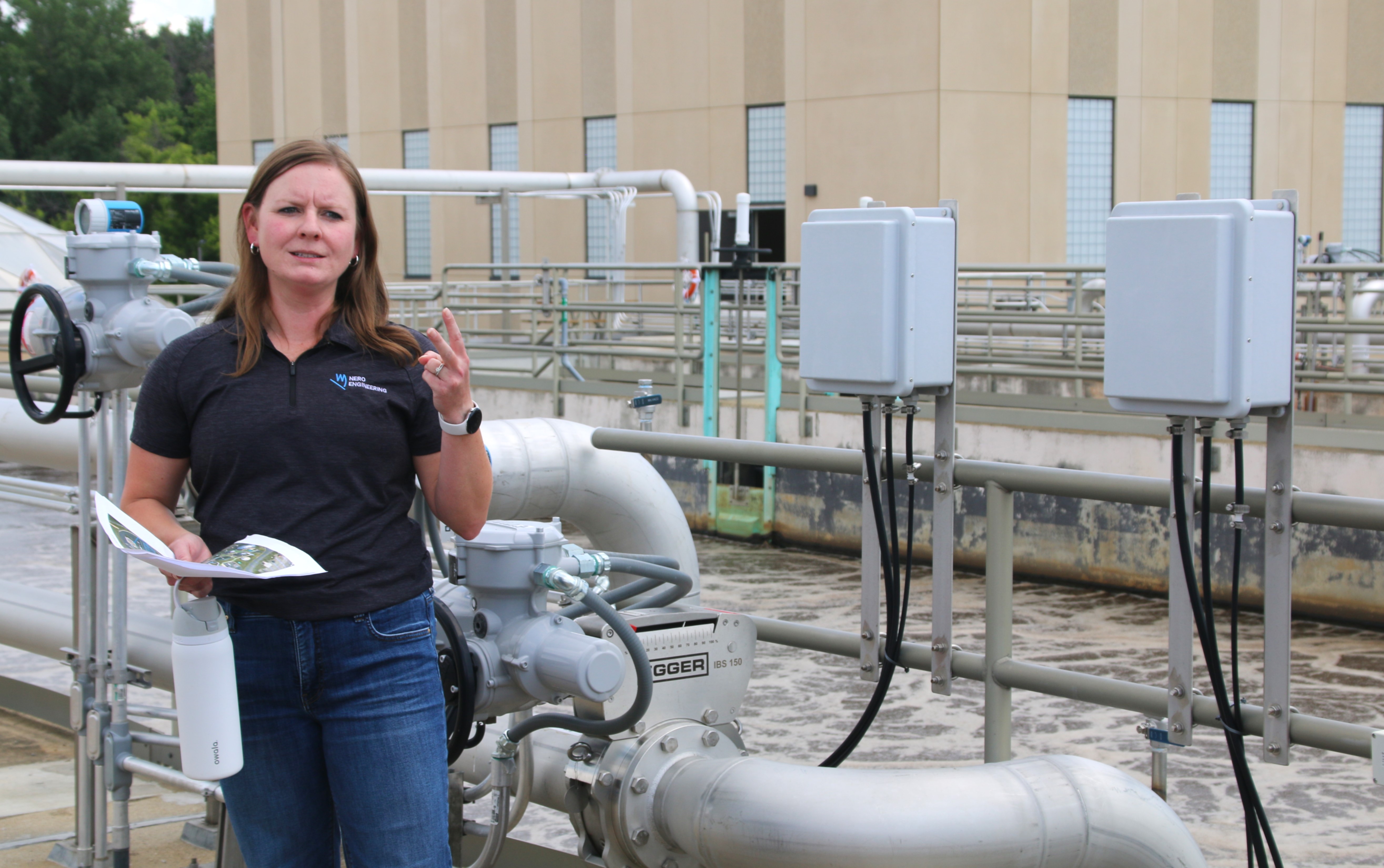
Jennifer Svennes, vice-president of Nero Engineering, explained the process of the aeration basins at the Owatonna wastewater treatment facility. Svennes has been part of the project since its planning stages. Staff photo by Kay Fate
“This isn’t the sexy stuff, but when you think of the critical things – this is one of the critical things.”
Owatonna Mayor Matt Jessop was right on both fronts as he stood with other local and state representatives at the ribbon-cutting ceremony Saturday for the city’s newly expanded wastewater treatment facility.
Nearly a decade in the works, the project morphed significantly over the years, to eventually become a regional facility by treating Medford’s municipal wastewater, as well.
Not only did the partnership bring additional funding, it addressed Medford's urgent need for a viable wastewater alternative following the 2021 discovery of severe structural neglect at its own facility.
The advantages reach further: The regionalization model guarantees that all processed water returned to local river networks – including the Straight, Cannon and Mississippi rivers – adheres to strict environmental safety thresholds.
All good things, Jessop agreed, “but if not for Jasinski, this thing is not happening.”
That’s Sen. John Jasinski, R-Faribault, who pitched the project to the bonding committee at the Minnesota Legislature for two years before it passed.
The senator thanked another mayor – former Owatonna Mayor Tom Kuntz, who Jasinski said was “very supportive,” especially after a smaller, failed bonding bill that Jasinski declined to vote for.
“The year (the funding) went through, the House passed a smaller bill, and I didn’t vote for that second bill – so we had (Rep. John) Petersburg voting for one and me not voting for one,” he said.
“I said trust me, we’re going to get more,” Jasinski said of his advice to Kuntz.
In May of 2023, Owatonna learned it received $22 million for the project; another $4.5 million was approved for Medford to modify its wastewater collection system so it could connect to Owatonna’s plant.
“The bonding chair and all the bonding committee members saw the importance of regionalization, and seeing you can save money by consolidating – not only just for the plants themselves, but in the future, for wastewater treatment operators, for upgrades, for all those things that will come,” Jasinski said.
“They know if (projects) are regionalized, they’re going to save money in the future.”
The $81 million price tag included three new buildings, which were featured on Saturday’s tour of the facility, including a membrane bioreactor building, a fine screen building and the solids thickening building.
The work rehabbed the primary clarifiers, aeration basins and site piping, and made upgrades to other processes.
The project has nearly doubled the former capacity – from 5 million gallons per day to more than 9 million gallons a day – and is predicted to serve the city’s expected growth over the next 25 years.
In addition to the $26.5 million in state funding, the city paid $3 million for the planning process out of pocket; it had also set aside $10 million in reserve funds to be used for the project. An additional $8 million came in the form of grant funding.
Medford’s remaining share was $6.5 million.
The remainder is covered by local utility rates; Owatonna had prepared for the plant’s expansion by implementing incremental 10-year sewer rate increases.
A groundbreaking was held in July 2022.