


From ‘suck it up’ to ‘get help’
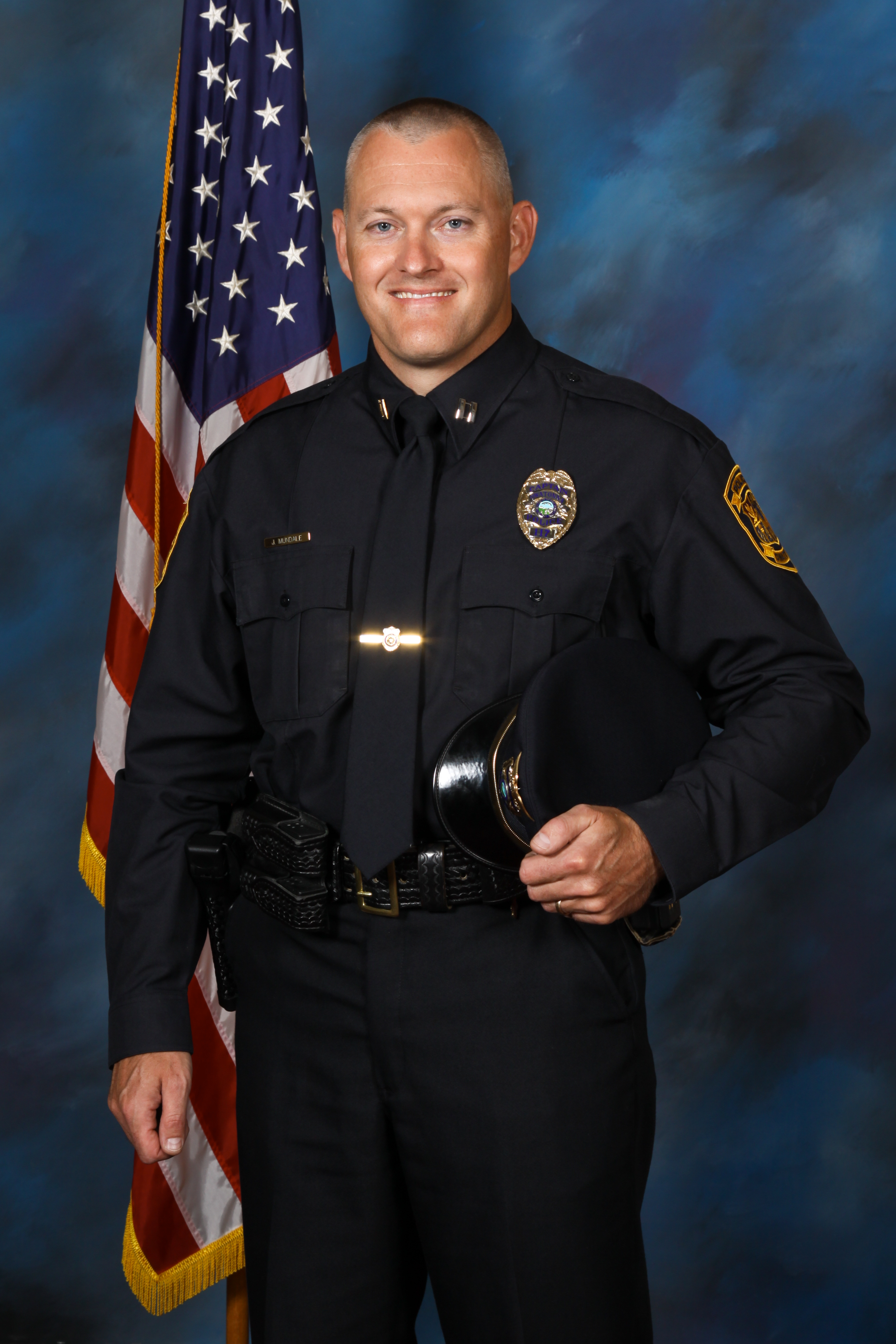
When Owatonna Police Chief Jeff Mundale put on the badge and holstered his gun for the first time 30 years ago, mental health wasn’t a priority by any stretch.
“You just kind of had to deal with it, you know, suck it up,” he said. “You wear a badge, you're supposed to be strong and tough. That was the mentality then.”
Much has changed over the past three decades.
For example, when Mundale was in the police academy, there wasn’t much awareness around PTSD and mental health, and how they impact both the mind and body.
How to deal with stress? It wasn’t a thing.
“They didn't teach you coping strategies in the academy,” Mundale said.
These days, Owatonna Police Department (OPD) works to promote the importance of both physical and mental wellness for all staff.
Many resources
One of the programs the department utilizes has officers supporting each other.
“Our officers are trained in peer support, so we have a peer support team within OPD,” Mundale said.
Essentially, the idea is for officers to work through things with their peers, a program many agencies are now implementing.
Like many departments and other employers, OPD also offers an employee assistance program (EAP), as well as an expanded EAP, through which “any staff member can reach services 24 hours a day, 7 days a week,” Mundale said.
“That includes families. We have volunteer police chaplains that will assist employees and their families,” he said.
But OPD has gone a step further, with its embedded mental health clinicians available to the department 24/7.
It's mandatory for all police department staff to meet with the clinician once a year.
“We require all our staff members from records, personnel, support services, our police officers, our first line supervisors, our commanders, our chief are required to do a mandatory mental health check up with one of our embedded mental health clinicians at least once per year,” Mundale said.
For some, the one visit is just the beginning.
In addition to the yearly check-up, the clinicians offer police department staff a minimum of a half dozen opportunities to meet with them, free of charge. Visits can include participation of family members.
While only mandatory in extreme cases, Mundale explained, partners or other staffers who recognize someone struggling can make a referral to the clinicians, who will then reach out to the employee.
“Those referrals are voluntary, so in other words, an employee does not have to participate if they don't want to,” he said.
Even though it's not required, Mundale said, they have seen success.
Changing lives
The Owatonna Police Department has had mental health clinicians for the past year and a half.
For some, the program has been transformative.
“They will tell stories about how this changed their life,” Mundale said about police officers and other staff. “It saved their marriage, it saved their career, because of the traumatic experiences that have accumulated over the years.”
Like Mundale, many officers climbed the ranks for most of their careers without learning coping skills, meaning officers have lived with the mental toll of seeing the worst life has to offer.
“We offered these services to one of our members of our team,” Mundale said. “And he said it, without a doubt, it saved his marriage, saved his career, maybe even saved his life.”
Mundale explained one of the goals for their wellness program, aside from promoting positive mental health and well-being, is creating "higher morale.”
In his view, having better morale leads to better employee satisfaction, employee retention, and even lower health care costs.
Mundale said early intervention for mental health can lead to more productivity at work.
He noted when people are out of work, it leaves gaps for shift coverage, which creates a domino effect as others have to cover their shifts.
“I think early intervention is important and just having a strong peer support team and creating a culture where, you know, employees are looking out for one another,” Mundale said.
He added early intervention doesn’t require much training.
“You don't have to really be a trained peer support team member to do early intervention…recognition of signs or symptoms (of) stress and burnout,” Mundale said. “Sometimes these conversations are best had pulling up to your partner door to door, and talking about it, and then encouraging either making a referral or encouraging they reach out for assistance.”
Breaking the stigma
The transition from a “suck it up” attitude to overseeing a department with expansive mental health, and well-being programs, has only happened with Mundale’s career. So for many, there is still a stigma with asking for help.
Mundale explained one of the ways they try to break that stigma is making all meetings with clinicians, mandatory or not, completely confidential.
“We don't know what the outcome is, and we don't know what the content of the conversation is,” he said.
Mundale explained the check-ins typically lead to more visits.
“Usually the product of these meetings is they create additional follow up visits and treatment for the officers… We pay bills monthly, and we know the services are being used,” Mundale said. “We just don't know who. And we just hope it's working, and we hope that it keeps our officers safe.”
Officers are also able to meet with the clinicians where they feel most comfortable.
“You gotta kind of break down those barriers, too,” Mundale said. “So offering these things inside our station kind of keeps it a little bit more private and confidential for our staff members, so they don't carry that stigma in the public.”
Tight-knit community
South of Owatonna is Blooming Prairie, a much smaller community and police department.
Police Chief Greg Skillestad said the department has a number of resources available for officers, from being able to text with trained first responders, to utilizing the national 988 crisis hotline.
Being a smaller department, Skillestad said, means officers are often around each other even when not at work, perhaps at an Awesome Blossoms football game or at someone’s birthday party.
“So I'm really involved with my other officers here,” Skillestad said. “It's not uncommon for us to send out a message every day and say, ‘Hey, how are you?’ Or just, maybe a joke or something like that. So, we're so close-knit that if something is off, we're definitely gonna know about it.”
As with any law enforcement agency, Skillestad knows there are those who are silent about their demons.
“But typically, we will know that there's something off, and we interact right away, we don't just let it go,” Skillestad said. “We've had that before. I've talked to people. My big thing is being proactive instead of reactive.”
Different perspective
Blooming Prairie City Administrator Anthony Martens has been on the job for less than two months but plans to have a conversation with his public safety leaders about what resources would be beneficial.
For Martens, mental health for first responders isn’t something he learned in his master level courses for public administration or from hearing stories. He was in law enforcement for almost two decades.
“I will say that, when it came time for me to be towards the end of my law enforcement career, you know, some of those things that normally didn't bother me…started…bothering me and so I kind of knew that I got to my point where I had seen enough, and I got to a point where, you know, this is, it's time for me to move on to a different career,” Martens said.
He used the analogy of a cup: As people see things, the cup gets more and more full, and there’s just so much they can handle.
“At some point, that cup's gonna be full, and it's gonna start spilling over the top, and I think without those programs or that mental health stability and help, potentially, that cup overflows too soon, or something happens that they can't handle it anymore, so we need to try to find those programs that can help either stop that cup from filling up or, just maybe decrease it a little bit,” he said.
Evolving profession
Mundale said when he first put on a uniform, he never thought he’d see anything like OPD’s different wellness programs, including those that deal with issues like strength and financial wellness education.
“The profession evolved in many different ways,” Mundale said. “There's just more awareness about it, and people are more open to talk about it, so I think that's what really created opportunities for departments to take a look at this.”
For Mundale, helping just one person on his staff is worth every investment made.
“If it's just one member out of our team of 42 staff members here, if it's just one member who saved his career, his relationship that's well worth it to me. We feel like we're slowly making progress, and staff are more open to utilizing the services, so we're gonna keep it out in front of them.”