


Trom Eayrs: Corporates are taking over agriculture
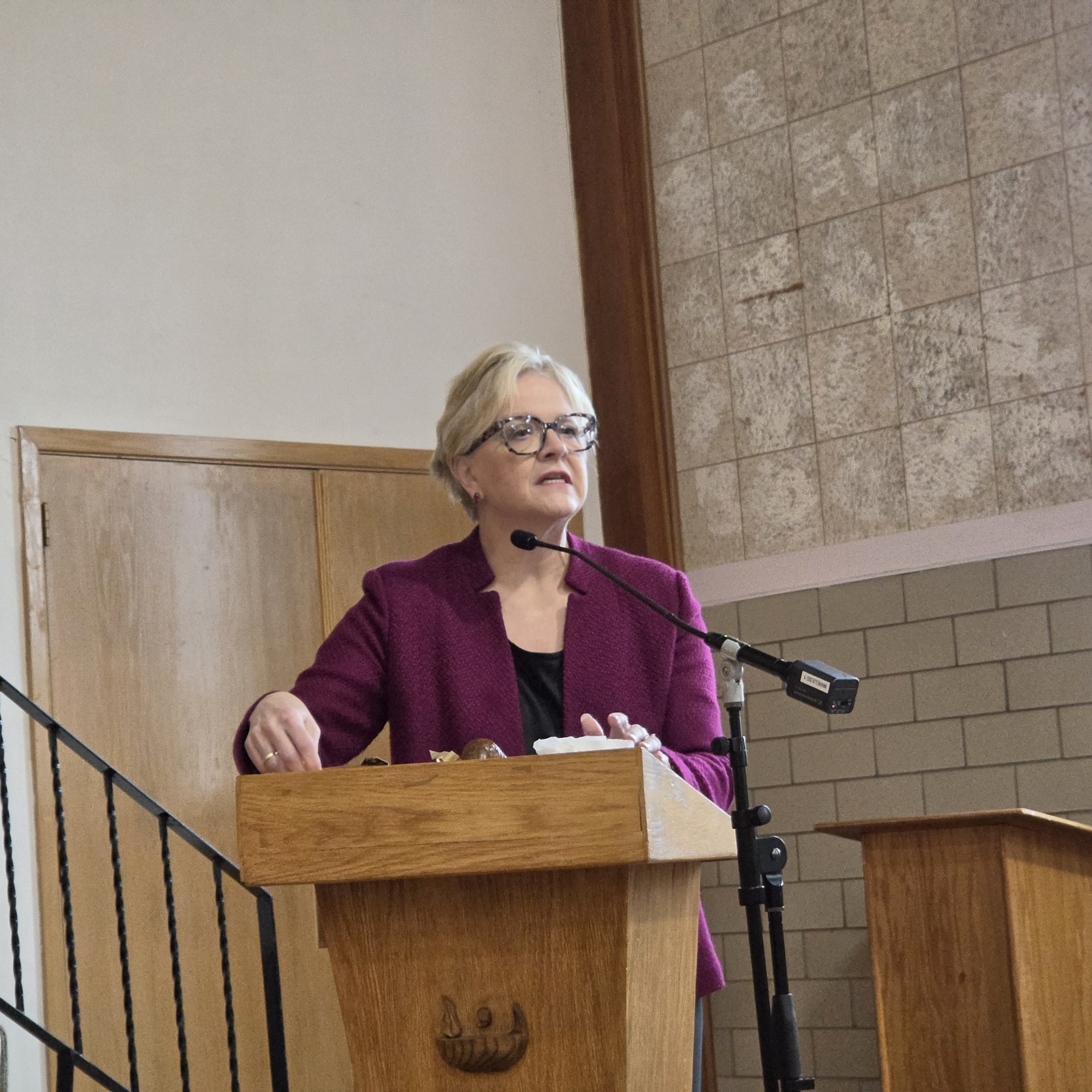
Sonja Trom Eayrs, who grew up on a family farm by Blooming Prairie and is now a lawyer in the Twin Cities, spoke last week at the Woman’s Club of Owatonna monthly meeting about her continuing fight against what she calls the corporate takeover of American agriculture. Staff photo by Karen M. Jorgensen
Sonja Trom Eayrs grew up on the Trom family farm in Westfield Township where they raised corn and soybeans. The farm had been started in 1892 when her great grandfather Edward Trom emigrated to Dodge County from Norway.
Now an attorney in the Twin Cities and an advocate against corporate agriculture, Trom Eayrs was the speaker last week at the September meeting of the Woman’s Club of Owatonna where she recounted the changes in rural agriculture and rural communities.
Trom Eayrs told the group that the changes started in the early 1990s when the first large hog operation was approved for Dodge County. A second building was approved for the site in 1998, she said. That, she said, was the beginning of big changes although no one understood what was going on.
For the farmer, she said, selling hogs had been a free market. During the five years after that first large operation was approved in Dodge County, she said, things changed for the independent farmer, including her sister Shelley and her husband Dave. Now, when they took their hogs to market at Hormel, she said, farmers to wait behind the large operators at the point of delivery of their hogs. She said 1998 was the breaking point when then U.S. Secretary of Agriculture Earl Butz told farmers to “get big or get out.” Shelley and Dave opted to get out of their farm and moved to the Twin Cities.
The Trom family, she said, has been on the front lines of the issue since that time including fighting against the installation of a large dairy farm. Neighbors pooled their resources to hire legal counsel, and the effort went on for several years before they were able to fight off the dairy, she said.
The move to large corporate farms, she said, hollowed out small towns including Claremont. Today, she said, the former Claremont High School is providing housing for farm workers.
One night in 2014, Trom Eayrs said her father called her to say he had received a notice of another request for a large operation within a half mile of the family farm and asked her for help in securing legal counsel.
Today, she said, there are 12 of the large farms housing an estimated 30,000 hogs within three miles of the Trom farm.
She went on to describe the operation of the farms which she said are organized in a three-tier organization. The local farmers, she said, are “contract growers” and the hogs are moved along from one farm to another as they grow to maturity. The next level up, she said, are the “integrators” who are the large corporate go-betweens who interact with the meat packers.
The contract grower is basically part of the system who builds the factory farm according to the requirements of those above them and who can set the prices. There is no free market, she said.
Housing of the large number of hogs on the farms causes issues with the manure which is stored in pits under the barns until they are pumped and also the conditions the hogs are raised in, she said. The manure, she said, has caused high nitrite level water and in areas with high nitrite levels higher cancer rates. Iowa has the highest number of factory farms, she said, and also increasing cancer rates.
She told the women attending the increasing corporate nature of farmers actually consolidates the number of choices available to the consumer. There are four main suppliers of meat in the U.S., she said, Tyson, JBS, Cargill and National Beef. To the consumer, she said, it seems there are many choices because each of these multinational companies owns numerous companies.
Trom Eayrs said she has continued to advocate against the system, and her family and their farm have been targeted by opponents.
In 2024, she published Dodge County Inc., Big Ag and the Undoing of Rural America, detailing the family efforts and situation with harassment and threats. She found out that her family is not alone in what is happening to those people in similar situations.
This is what is going on in rural America, she said.
In response to questions from the audience, Trom Eayrs said an important effort is to spread the word. She also encouraged individuals to get educated about the issues and tell others. Also support farmers markets and coops, support locally grown products and become active, she said.
She said she believes the public is now waking up to see the dangers with the current system. “I think now they are seeing the results of this corporate takeover of agriculture,” she said.